
Damp
Often treated superficially. The real cause may be poor ventilation, bridging, leaking gutters, high external ground levels, or defects in the building fabric. Surface treatments mask the problem — they don't solve it.
A building survey is one of the most important steps in any property purchase — yet it remains one of the most misunderstood. Here is what each level covers, what it can find, and how to decide.
A building survey is one of the most important steps in any property purchase — yet it remains one of the most misunderstood. Many buyers commission the minimum required, or none at all, unaware of the real risks they are carrying forward into ownership.
James carries out every survey personally. Not an associate. Not a junior surveyor sent to save costs. James — with 30 years of construction experience and dual chartered qualifications. That means the person inspecting your property understands not just what a defect looks like, but what caused it and exactly what it will cost to put right.
There are three levels of residential building survey available. Choosing the wrong level — typically by under-specifying — is a common and potentially costly mistake, particularly for older North East housing stock.
A traffic-light condition report with limited detail. Suitable only for newer properties in clearly good condition. Not recommended for most North East housing stock, which tends to be older, period or altered.
The most commonly instructed survey. Covers visible defects and maintenance issues with condition ratings. Appropriate for most conventionally built properties where no major defects are anticipated. Can include a valuation.
The most thorough inspection available. Recommended for older, extended, altered, listed or non-standard properties — which describes a significant proportion of North East housing stock. Provides the detailed advice needed to understand real condition, risk and cost.
A survey looks beyond the cosmetic finish — into loft spaces, under floors, around chimneys and behind cladding — for the defects that a casual viewing cannot reveal.
James's construction background means his reports include realistic cost guidance for repairs — not vague "specialist investigation" referrals. You know what you're buying into before you commit.
Documented defects with estimated costs give you an independent, credible basis to renegotiate on price — or to request that the seller addresses specific issues before exchange.
A thorough survey identifies maintenance priorities so you can plan and budget properly — avoiding costly emergency repairs in the first years of ownership.
Level 2 and Level 3 reports are typically delivered within 2 weeks of inspection (excluding bank holidays), with a follow-up call available to walk you through the key findings before you decide on next steps. An expedited survey option is available in exceptional circumstances — please ask when booking.
NE Property Consultants has no ties to contractors, estate agents or developers. Every assessment is wholly impartial — written to protect your interests, not to secure future referrals.
Some defects sound minor until the cost and disruption become clear. These six issues are among the most frequently misunderstood — and most expensive to resolve when caught too late.
Often treated superficially. The real cause may be poor ventilation, bridging, leaking gutters, high external ground levels, or defects in the building fabric. Surface treatments mask the problem — they don't solve it.
A few slipped tiles may be simple. Widespread deterioration, failing flashings, rotten timbers or ageing coverings are another matter entirely — and costs escalate rapidly once water ingress takes hold.
Not every crack means subsidence. But certain cracking patterns, visible distortion, or evidence of ongoing movement need proper professional assessment before you proceed with any purchase.
Wet rot, dry rot and wood-boring beetle damage can affect floors, roofs, lintels and hidden structural timbers. Because much of this is concealed, it's easily missed on a casual viewing.
Open-plan layouts, loft conversions, rear extensions and wall removals can add value — but badly executed work without proper approvals can create structural risk and legal complications at sale.
Blockages, broken drains, poor falls and hidden leaks can cause damp, instability and recurring repair costs. Drainage problems are often invisible until they become genuinely serious.
Certain buildings deserve closer scrutiny from the outset. Being alert to these factors before instructing a survey — or before making an offer — can save considerable time and money.
Appearances can only tell you so much. Direct, well-chosen questions put the seller and agent on record — and the quality of their answers can be just as revealing as the answers themselves.
The period between viewing a property and making an offer is often shorter than it should be. Pausing to answer these five questions honestly can make the difference between a sound purchase and an expensive regret.
Décor, presentation and staging are not the same as structural integrity. A well-presented property can still carry serious hidden defects beneath its surface finish.
Even minor visible signs can point to more significant underlying issues. If you noticed something on a viewing and moved on without asking, go back and ask now.
A seller who is vague about repair history, or who cannot produce documentation for alterations, may be concealing information you need.
If you cannot estimate likely repair costs with any confidence, you do not yet have enough information to commit to this purchase at this price.
If the honest answer is yes, that is your answer. A survey is modest in cost relative to the purchase price — and the potential cost of getting the decision wrong.
Buyers are often asked to pay for a document they've never seen. Here's the cover page from an actual Level 2 Home Survey Report — property address and client details removed for privacy — so you know exactly what to expect.
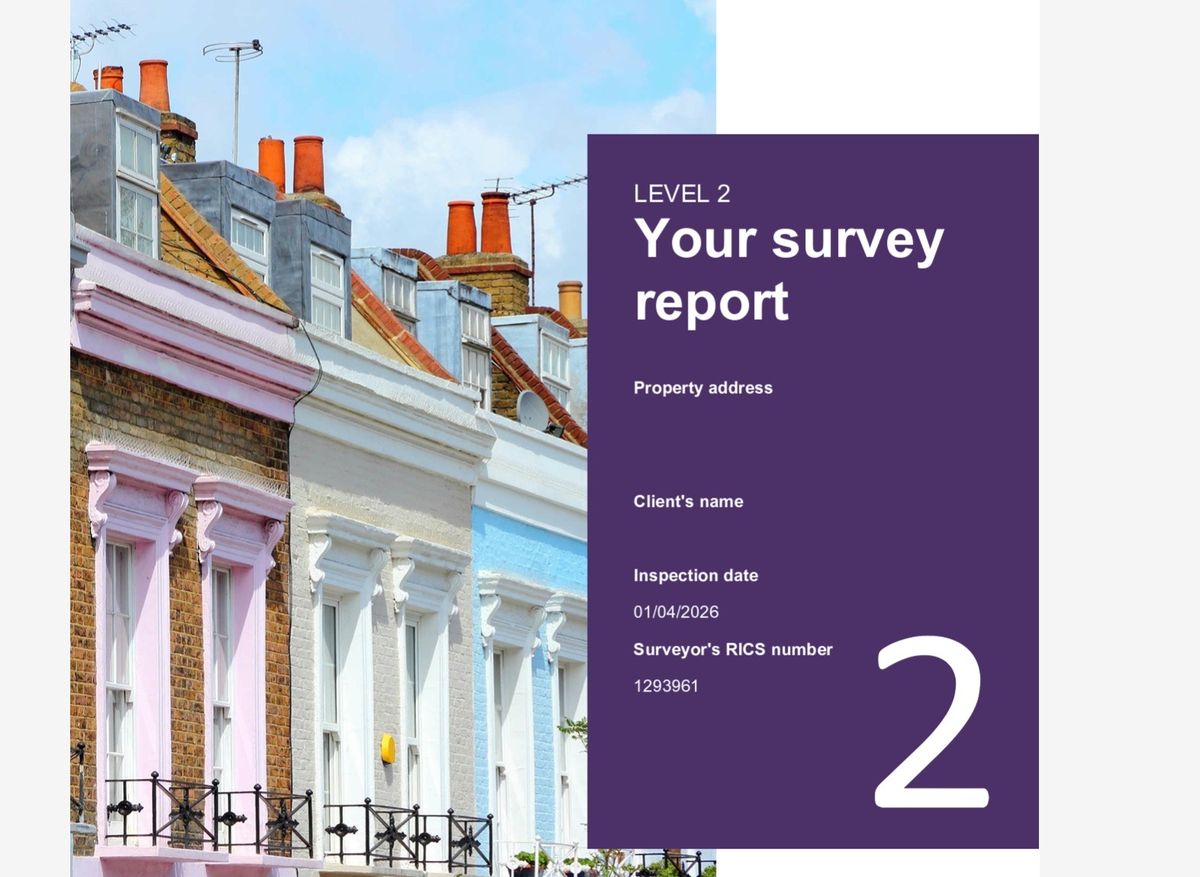
Every report is clearly structured and easy to follow — starting with the essentials: property address, client name, inspection date, and the surveyor's RICS registration number, so you always know exactly who inspected the property and when.
From there, the report sets out findings level by level and element by element — roof, walls, damp, services and more — with photographs, condition ratings, and clear guidance on what matters most.
If you'd like to see a full sample report before instructing a survey, just ask — James is happy to share one on request.
James personally carries out every inspection. Reports typically delivered within two weeks, with a follow-up call to walk you through the findings.